High-voltage lines are designed to last for decades. But years of exposure to wind, moisture, temperature fluctuations and lightning strikes leave their mark, often invisibly. At ETD bv, we map the actual mechanical condition of your components, so you make decisions based on facts, not assumptions.
What we do
Mechanical testing
We perform destructive and non-destructive tensile tests on insulator strings, brackets, connectors and other critical components of your high-voltage installation. In collaboration with university laboratories, we load components to failure and accurately determine the remaining load capacity. The result: a clear force-deformation diagram and an objective comparison with applicable standards such as IEC 60305 and IEC 60383.
Morphological and geometric analysis
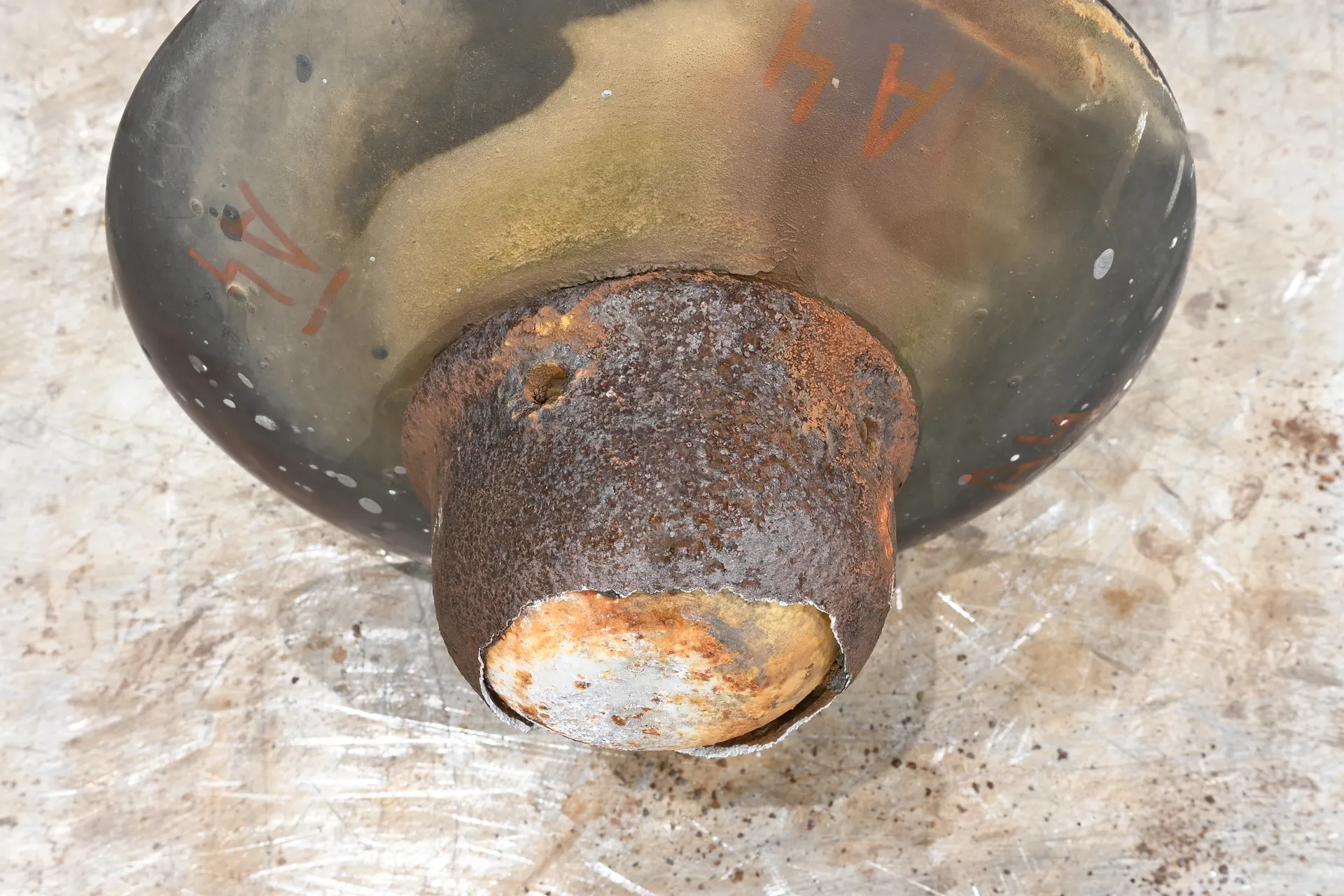
Before we pull, we look. Each component is visually and dimensionally inspected: wall thicknesses are measured, corrosion patterns are documented and wear on couplings is quantified. After testing, we analyse fracture surfaces to determine the failure mechanism, from brittle fracture to fatigue cracks.
Corrosion and degradation assessment
Corrosion is rarely uniform. Pitting corrosion, moisture accumulation in embeddings and loss of galvanisation layers create localised weak spots that can go undetected in a standard inspection. We reveal these hidden risks and quantify their impact on mechanical integrity.
Strength and reliability analysis
Based on measurement data, standard comparisons and failure mechanisms, we calculate the remaining safety margin of your components. We advise on the allowable operating load, taking into account dynamic peak loads from wind, conductor vibrations and short-circuit forces.
.D0snoFTd_Z1Mog0K.webp)
.BBk8rpDo_1yQWXc.webp)
.BcviLl7p_1CtPas.webp)
.CVHewHqq_ZLzPHB.webp)
.DHsq3-ug_Z1HhzSl.webp)
.CinExByi_Z2iCvLx.webp)
.BydSbunD_ZvW21V.webp)
.BnkjpBPu_2kB6Ee.webp)
.BZuzZsZ8_1nHVq2.webp)
.B0OGpCiI_26sJ7p.webp)
Why this matters
An insulator string that looks acceptable on the outside may be internally corroded to the point where only 80% of the required breaking strength remains. At that point, the component no longer meets the standard, and poses a risk under peak loading. Our investigations have shown that failure does not always occur where you expect it: not at the visibly worn ball-and-socket connection, but at the shell surface of the head, where moisture retention does its work invisibly. By testing proactively, you prevent unplanned outages, extend the service life of your installation and support your replacement strategy with hard data.
Our approach
Selection and receipt
In consultation with you, we select representative components for investigation. We document origin, marking and initial visual conditions.
Pre-test inspection
Detailed visual and dimensional analysis, including photographic documentation of corrosion patterns, crack patterns and geometric deviations.
Mechanical testing
Tensile tests under controlled conditions in an accredited laboratory, with accurate recording of force and deformation.
Post-test analysis
Fracture surface analysis, determination of the failure mechanism and comparison with applicable standards.
Reporting and advice
A clear report with conclusions, remaining safety margins and concrete recommendations for inspection, maintenance or replacement.
Who this is for
Our mechanical consultancy services are aimed at grid operators, engineering firms and contractors active in the high-voltage sector. Whether it concerns the service life assessment of an existing line, the evaluation of replaced components or the validation of new designs, we provide the technical substantiation you need.
Would you like to have the mechanical condition of your installation objectively assessed?
Get in touch